
Kingdom People – Fruit Bearer

fruit

Kingdom People – Fruit Bearers

The apples produced by a small orchard behind my grandparent’s house served many purposes. We ate them, cooked them, used them for ammunition in war games, and shot them off fence posts with a .22.  A few even became firecracker grenades and exploded in mid-air in a blaze of glory.

I know now we were wasteful.  How we use fruit is a matter of good stewardship, to be sure.  But the existence of spiritual fruit is a result of our union with Christ and the Spirit working in us.

The apostle Paul identifies the Fruit of the Spirit in his letter to the Galatians: “love, joy, peace, patience, kindness, goodness, faithfulness, gentleness and self-control.” (Galatians 5:22-23)  We can ignore the Spirit’s work and stunt our growth, or cultivate a receptive heart and experience abundance.  We are called to produce, and if we want to be kingdom people, we must welcome the Spirit’s transforming power.

The Fruit of the Spirit have multiple forms and applications.  They are relevant to almost every human experience and encounter.  And they are bound together by the “Three-in-One.”

In his second letter to the Corinthians Paul talks about the “fellowship of the Holy Spirit” (2 Corinthians 13:14) made possible through the grace of Jesus and the love of God.  Indeed all of these are gifts from God: His grace, His Love and His fellowship.

I realize I am being redundant since “grace” and “gift” are synonymous, and the Father, Son and Spirit are one. My point, however, is that the Fruit of the Spirit is an outward indication the divine is changing us on the inside.  In many ways the fruit we bear is the Godhead personified.  Through it the world sees the Father, Son and Spirit.

If I might go back to the way we treated my grandfather’s apples for a moment, I believe there might be a message for our role as fruit bearers.  We decided how the apples were used.  Some made their way into one of my grandmother’s apple pies or cobblers, and others were squeezed through an apple cider press.  Whether or not God gave us the apples for grenades is probably debatable, but I can testify that they brought much joy to my life as a floundering pre-adolescent.

But though we decide how we use spiritual fruit, we are not their designer.  To be honest, I sometimes assume, since the Fruit of the Spirit are seen in me, they belong to me.  In this way I disregard the fact God is growing them (remember, they are a result of His work, not ours), for a specific purpose.  Could it be the joy God is producing in me has already been purposed for a friend who finds himself at rock bottom?  Is patience especially strong so I can deal with a high maintenance brother who can’t seem to get his act together?

I am suggesting the Fruit of the Spirit shouldn’t be treated like random apples falling from a tree, but rather intentional works of grace from a God who knows exactly how He wants us to use them.  Whether or not we are willing to be used is another issue, and the quality of our fruit will depend on our openness to the Spirit’s leading.  But the possibility exists for God to use us as a mighty conduit to others.

If you want to be a fruit bearer, remember the fruit is not yours, but rather the result of the One who works in you. It has been purposed and your job is to nurture a bumper crop so your ministry can yield kingdom growth.  When we view the Spirit’s influence in this way we position ourselves to see God working in ways we could never have imagined.

I am not sure how we would toss a spiritual fruit in the air with a firecracker. Maybe that’s what we do when we “shine like stars” in our world (Philippians 2:15).  But one thing is certain: kingdom people were created to bear fruit, and if we remember where it comes from and what it is for, we are bound to make some noise.




Posted in Uncategorized | Leave a comment

Kingdom People – Those Who Amaze

amaze

Kingdom People – Those Who Amaze

Testimonies are powerful advertising tools, but they can also be liabilities. A few months ago television celebrity Dr. Oz was criticized by a Senate consumer panel for overstating the benefits of a weight-loss product.  The good doctor was never paid for his comments, and never gave others permission to use his name, but he learned the hard way what happens when one is a little too loose with his compliments.

On the other hand, sometimes we are incapable of overstating an outcome. Jesus’ encounter with a demon-possessed man in the land of the Gerasenes is one of those times.  This poor soul was inhabited by a legion of evil beings.  The demons tormented him day and night and led him to run among tombs outside of town and cut himself with a sharp stone.  The town’s people tried to chain his hands and feet to a rock, but the superhuman power of the legion broke free.  Did I mention he was naked?  That’s right.  The demon-possessed man of the Gerasenes was a chain-breaking, wrist-cutting, embarrassment.  The Chamber of Commerce never mentioned him in their promotional material, but he was the first thing tourists saw.

Then he met Jesus. When demons meet Jesus they act tough, but when Jesus speaks they shrink.  The biblical account of this man’s healing was unique in that God used a herd of nearby pigs as hosts for the demons.   Upon the demons’ request, Jesus cast them into the pigs and the frightened bacon bits ran over a cliff into the water where they drowned (Mark 5:11-13).  I have always wondered what the demons thought as they felt the rumble of the pigs’ feet under them, followed by dead silence as they were launched into space.  Surely they realized they had miscalculated.  Satan and his demons are crafty, but they keep forgetting who is in charge.

The town’s people were so frightened of Jesus’ power they asked Him to leave their region and as He was preparing to leave the healed man asked to go with Him. But Jesus told him to go back home and tell others what had happened.  The man wanted to be a groupie, but Jesus wanted him to be a witness.  When the people heard his story they were amazed.  His story was sound and his healing complete.  No one could argue when they saw the wacko man of the Gerasenes acting like a normal human being.  When the Lord truly transforms a soul, his power is obvious.

What is it that amazes us about followers of Jesus? Perhaps you have met multi-talented people with impressive resumes.  Or maybe you have met those with amazing faith.  I have seen God use people of great ability and faith to do some of His greatest work, but human accomplishments fade with time.

The most amazing characteristic a Jesus follower possesses is his testimony. He can claim to have faith.  He can wow others with his talent.  Yet, a testimony proclaims the before and after.  It tells a story of God’s grace in his life, from the moment he heard about Jesus to the day he was transformed by His grace.

Testimonies can be fabricated for strangers, but a real-life transformation will leave a mark on the hearts of our friends and family members. They may not understand why we are different.  Some might even resent the change.  However, it is hard for anyone to say a change has not taken place.

Kingdom people amaze, not by their own strength, but by the power of Jesus working in them. Transformed people are attractive.  They prove anyone can change, and they give hope to those who are running through their own empty tombs.

If you have been touched by the grace of Jesus, don’t worry about how you can impress the world with your faith. Be yourself.  You are an amazing work, not by your power, but by His.  There is an old song that says, “I stand amazed in the presence of Jesus the Nazarene, and wonder how He could love me, a sinner condemned, unclean.”  Let His amazing love flow through you.

Posted in Uncategorized | Leave a comment

Kingdom People – A Geological Wonder

rock

Kingdom People – The Geological Wonder

I love rocks. When I was a kid I could spend all day in a gravel driveway collecting specimens, mostly composed of limestone and quartz.  A few times I was certain I had found a secret deposit of gold or silver, but nothing ever panned out (pardon the pun).

When I pick up a rock I don’t just think of what I see, but also how it was created. Some rocks are metamorphic (produced by heat and pressure), and others are sedimentary (produced by pressurized layers of sediment).  Once they are created they can be further transformed by such things as water and ice, and sometimes by man for his purposes. When I find a rock I really like, chances are it is going to be sliced up and hung on a chain.  Yup, I love rocks.

Rocks are found everywhere in the Bible. Moses struck one with a staff to provide water for the children of Israel.  David killed Goliath with one.  And a big rock covered the entrance to the tomb where Jesus was buried.

But there was one rock of a different kind.  His name was Simon until Jesus made him a rock.  Simon’s brother Andrew brought him to meet Jesus.  That’s where he was turned into rock.  Well, actually, he didn’t become a rock, as in a piece of granite or sandstone.  Instead, He started his journey as a key leader in the early church, and the one who would proclaim the “keys to the kingdom” (the gospel) on the Day of Pentecost.  Jesus once told him, “You are Peter (which means Rock), and on this rock ” (again, the gospel) I will build my church (Matthew 16:18).

I am not sure what kind of rock Peter was most like. He wasn’t a sedimentary rock because He didn’t sit still long enough to build up sediment.  He might have been metamorphic since he was a pressure cooker when things didn’t go as he thought they should.  In the final analysis, perhaps we should just call him a gem since he was so valuable to God’s plan.  Peter truly was a geological wonder, of the spiritual kind.

While Peter might have been an important leader in the early church he wasn’t the only one with the “keys to the kingdom”. Did you know if we are followers of Jesus we have the keys too?  In fact, we are chips off the old block!  Ok, so Jesus didn’t call us rocks, but Jesus is the Rock, and we are His ambassadors to the world.

Jesus once talked about two kinds of builders (Matthew 7:24-25). The foolish builder builds on the sand and the rains wash his work away.  The wise builder builds on the rock and his life stands firm.  The “rock” in Jesus’ teaching here is the truth He delivered to the world.  We build our lives on Jesus, and everything He said and did.  He is our Rock.  Nothing else can stand up under the pressure this world dishes out.

I guess one could say Peter was a rock built upon The Rock. His name probably reflected the personality and leadership potential Jesus saw in him.  But his steadfastness would stand as a testimony to the Rock of his salvation.  Only the rock-solid grace of Jesus could resurrect Peter from his disastrous behavior during Jesus’ trial and crucifixion, and use him so mightily in His kingdom.

There is one thing we have in common with Peter. He went through periods of doubt when he didn’t feel much like a rock.  You might remember his stroll on the Sea of Galilee where he lost his focus and almost drowned.  And his actions during the hours when Jesus needed him most were inexcusable.  But Jesus refused to give up on Peter.  He knew what He could become, and when the Rock picks you out of the driveway, you just have to let Him have his way.

What do you believe God sees in you? Where do you believe the Lord Jesus wants to use you in His kingdom?  You are a wonder, you know!  You hold the key to someone else’s salvation.  And Jesus is still building His church through all of us, as we share Him with others.


Posted in Uncategorized | Leave a comment

Kingdom People – Sons of the Kingdom

weed

Kingdom People – Sons of the Kingdom 

Know thy feed store manager! As a kid, I enjoyed trips to the feed store with my grandfather.  Actually, it was a feed and seed store where farmers purchased food for their livestock as well as seed for their fields.  But most people called it the feed store for short.  Besides, the store also sold fertilizer, insecticides and herbicides, and there was no way all of those things would fit on a sign.

My grandfather trusted his feed store. It may sound far-fetched to think of the distribution of seed as a fraudulent industry, but trust me; anyplace you find a commodity that can be mimicked or manipulated in any way someone will find a way to cheat people.  It’s amazing how the price of a bag of feed or seed can go up when you tear off a tag and call it something else.

One thing is for sure: what goes in the ground will come out of the ground. As the Bible says, “You reap what you sow” (Galatians 6:7).  This truth was made clear in one of Jesus’ parables found in Matthew 13:24-44.  A farmer sowed some good wheat seed, but in the middle of the night an enemy came and sowed weeds.  When the wheat started to sprout and the farmer’s servants reported the problem, he told them to let the good and bad seed grow together.  The plants would be sorted at the end of the growing season and the weeds would be burned.

Jesus’ parable foretells an event at the end of time when God will separate the righteous from the unrighteous, or the saved from the unsaved. No one will be saved on their own merit, but rather because they have been made righteous through the blood of Jesus.  It is easy to see why we would want to be counted among the good seed.

So why is it important to know our feed store manager? Well, experience tells me the places we invest our time will determine the seed we become.  Later, Jesus told His disciples the weeds were sown by the “evil one” and the good seed by the “Son of Man.”  The seeds themselves are the “sons of the evil one” and the “sons of the kingdom”, respectively.  This means, if we hang out at the “Evil One and Sons” feed store, we are certain to raise hell (sorry).  But if we become seeds of faith that flow from “Jesus’ Feed and Seed” store, we are going to produce a bumper crop of righteousness.  We reap what we sow, so we need to not only be careful what we sow, but also what we become.

Are there really people who would take advantage of customers by passing off bad seed for good? Yes.  There are those with selfish ambition who don’t care who they hurt in the process of making a buck.  In the same way, Satan doesn’t really care what happens to us.  He only wants to break God’s heart, and if that means making us miserable and destroying our future, that’s fine with him.  He is the bad seed maker; the thorn-bush grower.

Most of us could probably make a quick list of bad environments where we are likely to pick up weed seed habits that lead to destruction. The world makes sin attractive, and sometimes it takes a while for its fruit to be obvious.  But do not be deceived.  Sinful seed will produce sinful behavior, which leaves lasting consequences.

How do we become good “kingdom seed”? We study the scriptures, make ourselves accountable to others in the church body, and model our lives after Jesus.  The Holy Spirit helps in the process as he convicts, prods, comforts and guides.

What kind of seed are you becoming?  In our world you have a choice.  The seed you choose will grow into the life you lead, and the legacy you leave.


Posted in Uncategorized | Leave a comment

Kingdom People – The Fish Boy

fishloave

Kingdom People – The Fish Boy

Recently, a 13 year-old California boy received school detention for sharing a chicken burrito with a friend. For those of us who grew up exchanging peanut butter and jelly sandwiches for tater tots, this sentence sounds insane.  But in a day when so many children seem to be suffering from severe allergies, no school wants to be sued for negligence.  So keep your burrito to yourself!  It could be more deadly than you think.

When I was a young minister the church camp in our area was blessed with food donations from local farmers. Other camps had hot dogs and grilled cheese.  Our kids ate steak and fresh vegetables.  Then the government raided our operation and shut us down.  Ok, so maybe it wasn’t that dramatic, but they did say all of our food had to be inspected and approved.  This brought our home-grown meal plan to a grinding halt.

All of this makes me wonder what would have happened today if one of Jesus’ disciples had tried to feed a crowd of over five-thousand people (John 5:1-13). Back then the disciple who rounded up the food was Andrew, the source was a “boy” and the fare was five loaves and two fish.  Was the fish fresh?  Were the conditions sanitary?  Where did all of those people go to the bathroom?  And what would an inspector put on his form for the food source, minus the five loaves and two fish: “The hand of Jesus?”

Consider the boy. He is rather obscure, but his actions are so typical of the kind of people God wants in His kingdom.  He has been the subject of much speculation.  Some say his mother allowed him to go hear Jesus that day and fixed him a lunch so he wouldn’t go hungry.  Others think he may have been carrying the family meal.  If this was the case he might have had some “splanin’” to do when his parents found out their food was gone.  We really don’t know why this boy was there, or why he was carrying what was apparently the only sustenance in a mob of thousands.  We do know he gave what he had to Andrew, and Jesus used it to feed the multitudes.

My personal opinion is whatever circumstances brought the boy and his food to Jesus’ seminar that day, the whole thing was orchestrated by God. God provided the smallest meal imaginable to highlight one of the most amazing miracles possible.  Not only did He feed over five-thousand people (assuming only the men in the crowd were counted), but there were twelve baskets of bread left over.  All of this was possible because a boy surrendered his lunch to a disciple named Andrew.

The most obvious lesson we learn from this account is how Jesus takes the smallest contributions in our lives and uses them for big purposes.  We may not be the personal recipients of these purposes, although I am sure the boy who gave up his meal also ate well.  But we have the opportunity to watch God multiply our resources for His glory.

But there are other lessons. For example, it took a lot of trust for this boy to give up all he had, just because Jesus needed it.  What if Andrew merely needed to feed Jesus and the boy was forced to do without?  Certainly there are many occasions in our lives when we have to trust Jesus needs what we have more than we do.

We also need to be willing to make sacrifices with no expectation of fame or fortune.  Indeed, this boy did become very famous, but we don’t know his name.  There is no indication Jesus had him come before the crowd of five-thousand so they could applaud his generosity.  He didn’t get a letter with a small bronze lapel pen that said, “I gave it all.”  The boy might have become a home-town hero, but in general he slipped into anonymity.  In the same way, as long as Jesus is lifted high, we shouldn’t worry if people forget our investment.  It never hurts to thank others for the good they do, but in the kingdom we always care more about what God does with what we give Him than we do the gift.

I have wondered if I would have been as generous with my lunch that day. Maybe I would have hid my food basket behind my back when I heard Andrew combing through the crowd in search of food.  It takes faith to let go of what we want so God can give others what they need.  But when we do, we are blessed.  What would you do if Andrew asked you?


Posted in Uncategorized | Leave a comment

Kingdom People – Worshippers – John 4:23-24

well

Kingdom People – Worshippers – John 4:23-24

Christians and worship go together like peanut butter and jelly, Mom and apple pie, nuts and bolts. We call the time we spend together on weekends “worship services”, and the tone we set when we pray “worshipful.”

Worship has always been important to the people of God. And it has been important to God.  Why else would He have spent so much time instructing Israel in the construction of the tabernacle and permanent temple?

Of course, worship is not necessarily Jewish or Christian. In the Bible we find worshippers of pagan gods and political leaders.  Shadrach, Meshach and Abednego were thrown into a fiery furnace because they refused to bow down to a statue of Nebuchadnezzar.  Paul once referenced those absorbed by selfish ambition whose god was their belly.

Worship describes our heart’s allegiance as well as how that allegiance is lived out on a daily basis. It is possible to worship our jobs, our hobbies, our possessions, our bodies and even our families.  This doesn’t mean these things aren’t important, but when we make a blessing from God the center of our attention, we can easily lose our way.  We end up destroying the very things we love because we love them more than God.

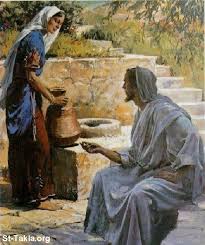
When Jesus met a Samaritan woman at a well, His discussion with her started with the topic of worship. Jews worshipped on a hill in Jerusalem and Samaritan’s worshipped on Mt. Gerizim.  Both sites were important in the history of God’s chosen people, but each of the respective two groups claimed one or the other as their place of worship.  Since Samaritans were looked down on by Jews, their place of worship was also a point of scorn, which is why the woman who met Jesus brought up the subject.  She couldn’t imagine why Jesus cared to talk with her with the baggage their two peoples shared.

Jesus responded with love and hope.  He talked with the woman about her personal life and the refreshing “living water” that flows from God.  After their conversation, the Samaritan woman rushed into town to share her encounter with others, and those who heard went out to meet Jesus.

Going back to Jesus’ conversation with the Samaritan woman: He said something very important about worship. He said, “Yet a time is coming and has now come when the true worshipers will worship the Father in spirit and truth, for they are the kind of worshipers the Father seeks.” (John 4:23)  By way of explanation, we worship Jesus in “spirit” when we turn our hearts toward Him, and we worship him in “truth” when we see Him as He has revealed Himself in scripture.   In other words, it doesn’t matter which mountain we stand on when we worship, but it does matter who (or what) we worship.

In our culture we must fight two urges: to put too much attention on how we worship and to worship God as we choose to see Him. The first urge gets wrapped up in the details of worship and the second uses worship as a means to our own ends.  God sees through it all.  He isn’t impressed by our mountain, and He certainly doesn’t like being used for our personal ambitions.

The only way to worship is with a humble heart, stripped of every shred of human pride that keeps us from seeing God as He has revealed Himself to us. Kingdom people are worshippers.  For them, worship is more than something they do.  Instead, it is the very presence of God in every aspect of their lives, flowing in, surrounding and inhabiting.

I am glad I don’t need a mountain to worship. Now if I can just get over my bad habit of telling God what to do.

Posted in Uncategorized | Leave a comment

Kingdom People – The Desert Man – John 1:23-27

desert

Kingdom People – The Desert Man – John 1:23-27

Some people will do anything for power. My grandfather was involved in politics most of his life, and when he died, the funeral chapel was packed with people from every walk of life.  My wife, children and I arrived fifteen minutes before the service began, expecting to sit in a special section reserved for our family.  We stood in the aisle and waited patiently as three men in dark suits socialized with one of our family members who happened to be running for governor at the time.  As the time for the start of the service grew close, the men in dark suits decided to sit down in the family section, effectively edging us out.  We found seats in the main chapel, which were better for viewing the service, but not very good for grieving.  I don’t suspect the men in suits ever realized their gaffe.

A few years later, when my grandmother died, the men in suits didn’t bother coming. The governor’s race was over, my relative had lost, and my grandfather’s influence in the community had waned.  And yes, we were able to take our seats in the family section.  That’s the way worldly power flows, but there is another kind of power…

When John the Baptist started proclaiming the kingdom in the desert, the crowds gathered. Some came with sincere hearts and were baptized.  Others came to question.  The Pharisees asked, “Why, then do you baptize if you are not the Christ, nor Elijah, nor the Prophet?”  John answered, “I baptize with water, but among you stands one you do not know.  He is the one who comes after me, the thongs of whose sandals I am not worthy to untie.”

John the Baptist was exploding onto the scene in a most powerful way. Yet, his attitude was that of a servant.  He was the desert man, paving the way for the Son of Man.  I am certain John was glad to see the crowds because it gave him an opportunity to introduce Jesus.  But as far as his prominence in the kingdom, John just wanted to do his part, then step aside.

Here is the difference between worldly power and kingdom power: The first uses people to acquire influence and position. The second used influence and position to serve people.  Some people will do anything to possess power.  Kingdom people will serve anyone to share Christ.

It isn’t a sin for a follower of Christ to achieve power, as long as he recognizes the opportunity it affords him to benefit the kingdom. Please don’t misunderstand.  I am not suggesting God puts people in worldly positions so they push people around for the sake of the gospel.  Rather, he needs those who can show the world that true greatness comes through serving.  In a teaching session with His disciples Jesus once said, “You know that the rulers of the Gentiles lord it over them, and their high officials exercise authority over them.  Not so with you. Instead, whoever wants to become great among you must be your servant, and whoever wants to be first must be your slave.” (Matthew 20:25-27)

We can all serve, regardless of our positions in the world. If we are breathing, and old enough to communicate and move our arms and legs, we can serve.  I have seen preschoolers serve the elderly in nursing homes and I have seen the elderly serve preschoolers in their classrooms.  I have seen people serve at home, at work, and at play.  I have watched people reach out to others in their prison clothes and with their bodies shrouded with bandages.   In God’s providence, He takes each of these situations and finds a way to use them for His glory.

You don’t have to live in a desert to be a kingdom person, but you do need to be willing to follow the Lord, wherever He leads. Our work is always about Him, and our calling is to be a vessel He can use.

Posted in Uncategorized | Leave a comment

Kingdom People – Threads – Mark 10:17-27

thread

Kingdom People – Threads

Can riches keep us out of heaven?  They say, “You can’t take it with you.”  But is there anything wrong with accumulating as much as possible while we are here?

Once Jesus said, “It is easier for a camel to go through the eye of a needle than for a rich man to enter the kingdom of God” (Mark 10:25).  Some have suggested this was a reference to a narrow mountain pass where laden camels had to squeeze through with their cargo.  Others believe Jesus was using a ridiculous exaggeration to emphasize how riches can complicate our spiritual life and shipwreck us along the way.

When Jesus’ disciples heard His camel metaphor they asked, “Who then can be saved?”  Jesus answered, “With man this is impossible, but not with God; all things are possible with God” (Mark 10:27).  So, does God save us from our riches or in spite of them?

While people may not agree on how to interpret Jesus’ camel metaphor, three is one error all us must avoid: that of thinking there is some sort of wealth margin that determines our eternal destiny.  In other words, there is no limit to how much we can make or save before we are ruled too rich for heaven.  I know this sounds ridiculous, but some of the conversations I have heard on this subject lead me to believe there are those who think this is the case.

The problem isn’t wealth, but rather our core trust in God and its relationship to everything else in our lives.  Jesus’ reference to the eye of a needle was in response to a rich man who came to Him seeking eternal life.  We can only assume Jesus discerned this man loved his money so dearly he would give up anything to keep it.  So Jesus asked him to jettison everything.  That’s right!  The man had kept all of the Old Testament commandments, but there was one more thing he needed to do.  Jesus said, “Go, sell everything you have and give to the poor, and you will have treasure in heaven. Then come, follow me” (Mark 10:21).

Do we all need to sell everything we have to inherit eternal life?  No.  If we have made wealth our idol is it possible we will miss out on eternal life  if we don’t?  Yes.  When we trust anything more than God we distance ourselves from His kingdom authority and put our souls in danger.

There are other idols.  In fact, a self-imposed life of poverty can lead to self-righteousness and also keep us from God.  If a humble lifestyle teaches us greater reliance on God and opens our eyes to the needs of the downtrodden, then it can be a blessing.  But if we spend our time condemning those with more of this world’s wealth and patting ourselves on our backs for our spiritual superiority, we are as guilty as the richest of the rich who put their hope in themselves.

Kingdom people are threads.  They move smoothly through the eye of the needle because there is nothing they hold so tightly it cannot be set aside for the sake of eternity.  How do we know if we are a thread instead of a camel?  While it is true we can be dishonest with ourselves about the nature of our hearts, kingdom threads are generous and invest in what God is doing.  Their giving spirit doesn’t puff them up, but rather increases their enthusiasm for kingdom work.

A kingdom thread doesn’t tie a knot in his life to keep him from going “all in.”  Instead, he takes away every hindrance and continually allows the Holy Spirit to refine Him for kingdom work.

I will be honest: I have trouble finding the eye of the needle at times.  I would rather be in control of my life than trust God completely, and I feel more validated by the world when I can prove my own righteousness then I do simply standing in grace.

In comparison to some, I am not that rich in material terms.  In relation to the world, I have more wealth than I will ever use.  But I know there isn’t a marker planted somewhere along life’s highway that tells me I have entered the “wealth danger zone.”  Rather, the zone is my heart and the danger lies within.  If I put God first, everything I own takes on purpose.  If I put wealth, or any other idol in front of God, I offer my life on the world’s altar and succumb to its agenda.

Are you a thread or a camel?  I have nothing against camels, and they have their place in God’s creation.  I just don’t want to be one.

Posted in Uncategorized | Leave a comment

Kingdom People – The Wounded – Matthew 4:23-24

red cross

Kingdom People – The Wounded

Never ride a friend’s bicycle down “dead-man’s hill.”  I learned this hard lesson as a kid during a summer visit to Kentucky.  The bike looked sturdy.  How was I to know the handlebars were loose?  Allow me to offer one other piece of advice: never try to pop a wheelie with a borrowed bicycle when you are speeding down “dead-man’s hill.”

The last thing I remember was the wheelie.  The next thing I remember was a picture of a cat on a stranger’s wall.  A kind man saw my spectacular crash and transported my tattered, limp body from the middle of the road to his living room couch.  I was later told his wife administered first-aid, but I can’t swear to it since I was drifting in and out of consciousness until arriving at the emergency room.

Guess who was blamed for my accident?  My friend, who coaxed me to go down “dead-man’s hill”?  His father who had evidently failed to respond to a repair request when the nut on the handlebars needed tightening?  Satan?  No.  Me.

I learned something that day about being wounded.  The first things people want to identify are the bad choices we made that led to our injuries.  Ok, so I shouldn’t have popped the wheelie.  But it seems there are always things we could have done to avoid our pain, and those who watch our lives from the sidelines are a bit too quick to show us the error of our ways.

When Jesus ministered on the earth, He met people with all kinds of diseases and demon-induced disorders.  In Matthew 4:23-24 we read, “Jesus went throughout Galilee, teaching in their synagogues, preaching the good news of the kingdom, and healing every disease and sickness among the people. News about him spread all over Syria, and people brought to him all who were ill with various diseases, those suffering severe pain, the demon-possessed, those having seizures, and the paralyzed, and he healed them.”  What a mixed bag of misery!  Some of Jesus’ patients were probably responsible for their condition while others were the innocent victims of circumstances beyond their control.  But Jesus healed them all.

I don’t mean to suggest Jesus wasn’t discerning when it came to how people incurred their wounds.  He knew demons often take up residence in lives or cultures that are spiritually void (Matthew 12:43-45).   On the other hand, He pushed back on those who liked to put labels on those with diseases and other infirmities (John 9:1-3).

The bottom line in Jesus’ ministry was this: the kingdom of God was (and still is) for the wounded.  It was for the physically wounded, and those with mental, emotional and spiritual sickness.  It was for perpetrators and victims.  The only people who were incapable of entering the kingdom were the self-righteous who refused to recognize their spiritual emptiness.

In Luke 15 Jesus told His famous parable of the Prodigal Son.  A younger son demanded his inheritance from his father and wasted it on sinful living in a far country.  While he was away he came to his senses and crawled back home, hoping to be counted among his father’s servants where he could at least have food and a roof over his head.  Instead of treating him like a servant his father threw a party and celebrated his son’s homecoming.  As the band played, the father’s older son listened at a distance.  He resented his younger brother’s ungodly journey as well as the shame he had brought to the family.  His father pleaded with him to come to the party.  He said, “But we had to celebrate and be glad, because this brother of yours was dead and is alive again; he was lost and is found.” (Luke 15:32)

Wounded!  It isn’t the healthy that enter the kingdom, but the wounded.  Wounded people are kingdom people.  We are all wounded by sin in some way, and we desperately need the healing grace of God.

Have you ever wondered why so many institutions that provide care to those who are suffering reflect the presence of Christ?  Hospitals are named after early followers of Jesus and organizations that reach out to the poor and homeless are largely faith-based. It is because the kingdom is all about healing the wounded.  Our King is the Healer and His people reflect His heart.

Never let a wound keep you from the kingdom of God.  The kingdom exists for the wounded, and only those who are willing to admit their need can enter in.


Posted in Uncategorized | Leave a comment

Kingdom People – Spirit Led – John 3

Kingdom

Kingdom People – Spirit Led

Jesus and the Jewish ruling council, also known as the Sanhedrin, were on a collision course.  The men who made up the council were Jesus’ spiritual brothers, and it is possible some of them were among those who were fascinated by Jesus’ wisdom as He discussed His Father’s business in the temple at the age of twelve.  But fascination digressed into disgust by the time Jesus’ ministry hit its stride.

What did the ruling council have against Jesus?  Several possibilities have been suggested, some obvious and some a matter of speculation.  We know spiritual elitists steeped in legalism, such as the Pharisees, made up a portion of the council.  They hated Jesus because He put people above rules.  Jesus didn’t disregard rules, as was evidenced when He reinforced His Father’s moral law in His Sermon on the Mount.  Rather, He grew weary of the way the Pharisees crafted their own version of morality and used it to manipulate the lost sheep of Israel for their own purposes.  In one of His famous “woes” to the Pharisees Jesus said, “Woe to you, teachers of the law and Pharisees, you hypocrites! You are like whitewashed tombs, which look beautiful on the outside but on the inside are full of dead men’s bones and everything unclean.  In the same way, on the outside you appear to people as righteous but on the inside you are full of hypocrisy and wickedness.” (Matthew 23:27-28)

Members of the council were also jealous of Jesus’ popularity.  While Jewish people may not have been particularly proud of their leaders, they were reluctant to follow rebels who were demonized for their behavior.  But Jesus was different.  He wasn’t a legalist, but somehow managed to avoid sin.  People loved Him because He loved them the way His Father loved them.  Had Jesus been solidly in the camp of the council things might have been different, but He was too displeased with their pompous self-righteousness to ever be considered an associate.  As well, He was too good to be easily incriminated for His independence.

This was the context within which Nicodemus, a member of the ruling council, approach Jesus by night.  We don’t know for sure how his heart might have been different from other council members, but it is impossible to miss the candid and respectful nature of his conversation with Jesus.  There is no detectable bitterness in his tone; only an inquisitive heart, as well as a sense of spiritual urgency that would compel him to seek Jesus in secret.  It appears  Nicodemus’ admiration for Jesus grew with time, since we find him helping Joseph of Arimathea care for the Lord’s body after his death (John 19:38-39).

Where Nicodemus landed in his walk with God, we don’t know for sure, but we are certain he heard what it takes to be a kingdom person.  Jesus declared, “I tell you the truth, no one can see the kingdom of God unless he is born again.” (John 3:3)  When Nicodemus pressed Jesus on the meaning of His words Jesus said, “I tell you the truth, no one can enter the kingdom of God unless he is born of water and the Spirit.  Flesh gives birth to flesh, but the Spirit gives birth to spirit.” (John 3:5-6)

We may not understand everything about the Holy Spirit, but we can detect the difference between a rule-based religion and one that is spirit-led. Remember, Jesus honored God’s commandments.  Therefore we should not think the notion of a spirit-led life frees us from moral accountability.  In reality, it is impossible to be spirit-led unless we obey God’s commands because His truth has been revealed to us by the Holy Spirit.  Spirit-led does not suggest a life without boundaries, but rather one that seeks God’s heart first, then interprets His Word in light of His nature.  This was the problem with the ruling council.  They were trying to live out godly principles with a worldly mind.

Jesus said, “But seek first his kingdom and his righteousness, and all these things will be given to you as well.(Matthew 6:33)  If we seek God’s heart above all, everything else will fall into place.  Our lives will please Him and He will be pleased with our lives.  His kingdom will have come to earth, first in us, and then through us in everything we touch.

Posted in Uncategorized | Leave a comment