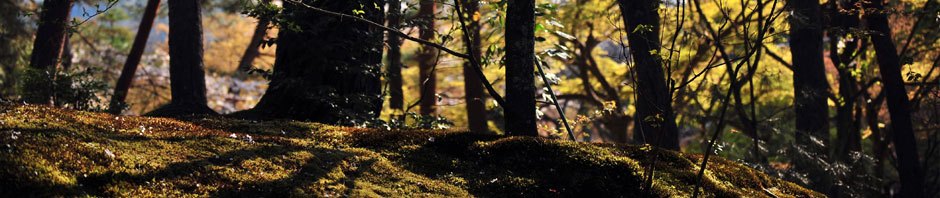
Several years ago, I read a book titled, “The Hidden Life of Trees: What They Feel, How They Communicate; Discoveries from a Secret World” by Peter Wohlleben. If you enjoy books about nature, I can recommend this one, and although I don’t buy into all of Wohlleben’s theories and conclusions, I haven’t looked at trees the same since. I now wonder if they are watching me, which suggests you may want to line up an appointment with a therapist if you read the book.
I do believe Wohlleben makes one important point that cannot be denied: trees live on a different time schedule than humans. For example, Great Basin Bristlecone Pines have been known to live 5,000 years. While this lifespan may amaze us, as worshippers of God, we recognize 5,000 years is a very small season in light of eternity.
Still, in this finite life, trees remind us the passage of time has many perspectives among living things. I realize the term “perspective” suggests trees and other non-human organisms have the ability to think. You must excuse this reference as I believe it is another lingering impact on my life from Wohlleben’s work. But hopefully, you get the idea.
Imagine you lived life as if you were a tree. Not “as” a tree but “as if” you were one. I am thinking specifically of how we might see changing seasons in our lives if we imagined we were going to be on earth for 100 years, 500 years, or 5,000 years like the Great Basin Bristlecone Pine. It seems, so many of our decisions are based on the biblical baseline of “threescore and ten” (Psalm 90:10), and corresponding milestones such as young adulthood, midlife and retirement. What if we put these aside for a moment to see things through a different filter?
I recognize there are certain realities that are indisputable. As young adults we have tons of energy. In midlife, our energy wanes some even as we struggle under a load of responsibility in our careers, distress over financial challenges and physical maladies as our bodies start to show their age. Later, retirement not only changes our status, but thrusts us into the world of actuaries and health care plans, both which focus on age, risk and quality of life.
We also face anxieties along the way which are not associated with physical realities. A mid-life crisis may result from evaluations we make of ourselves and others which are not rooted in truth. A “comfortable” retirement may suggest freedom from financial insecurity. But financial security does not guarantee a life of fulfillment, meaning and joy.
Simply put, while we cannot ignore the limitations of our earthly lifespan, we should also guard against allowing this awareness to define our identity. We are more than the man-made time divisions we create from the cradle to the grave. Consider these principles:
There is value in marking time in our lives, but we should do so within the context of biblical stewardship. God’s Word says a great deal about time. In a Psalm by Moses, we are told to “number the days of our lives” to gain “a heart of wisdom” (Psalm 90:12). Our goal in life is not to see how much money we can have in our bank account when we die, although it is good to have adequate financial resources. Instead, we are to use our time to fulfill the will of God. When we keep this in mind, we gain wisdom and use our days for His glory. The Apostle Paul told us make the most of “every opportunity” by showing wisdom in the way we act toward outsiders. If we live our entire lives for ourselves, we miss what God is doing. But if we look for people and moments God brings into our lives for a purpose, we can become ambassadors of His grace. Time belongs to God, is given by God and should be seen in light of His will.
Secondly, our time on earth should always be lived with an eye on eternity. Eternity with God isn’t the only thing that matters, but it is the thing that ultimately matters. For this reason, the Apostle Paul wrote, “So we fix our eyes not on what is seen, but on what is unseen, since what is seen is temporary, but what is unseen is eternal” (1 Corinthians 4:18). Certainly, we should seek meaning in our temporary lives. God has showered us with blessings to be enjoyed, and given us gifts with which to bless others. There is so much I personally want to experience in this life, I pray God allows me to stay here as long as possible. But after this life, there is “forever”. I need to use this life to its fullest, but I need to prepare for what comes next. It is important to measure the days of my life, as Moses advises us, but we do this, not to measure how long we are living, but rather how we are living and for whom we are living. This means worrying about how much I have accomplished by mid-life or how well off I am at retirement, while important, is not as important as asking, “How has my life to this point been used for God?” And “Am I investing my life in places that will matter in heaven?”
Finally, as our wisdom grows, so will our ability to celebrate God-honoring, eternally focused moments in our lives. Please don’t misunderstand. I believe there is tremendous value in honoring our earthly achievements. Not only does it feel good when we accomplish our goals, but others are encouraged when we celebrate with them. Romans 12:15 tells us to “rejoice with those who rejoice” (and to mourn with those who mourn). It would be unkind for us to throw water on others’ celebrations by telling them their rewards here are just temporary. On the other hand, with the right focus, we will begin to recognize the difference between things that bring us joy on earth alone and those which bless us now and forever. Some examples of this latter group include the people we bring to Christ, the ministry we provide for the hungry, thirsty, sick, homeless, naked and imprisoned (Matthew 25: 31-46), and our growing relationship with the Lord. These things give us cause for rejoicing here and there, now and forever.
I am still amazed when I think about a 5,000 year old tree. Imagine the things we could experience if we lived this long. But while I will be very fortunate to live to 100, I can have the perspective of the Great Basin Bristlecone Pine. I can worry less about the passing of time and relish the changing seasons of my life where God directs my steps and leads me close to His side.
I hope you live a long life. I also hope the life you live is full of amazing accomplishments. And most of all, I pray you know the life we find in Christ; that which feeds our souls in this lifetime and makes us complete in the time to come.
And if you drive through a canopy of trees and you sense someone is watching you, pay attention. It could be a wild animal.
Or maybe…

 storiesofvalue